Authentic Timbre & Color Palette
Hearing your own timbre and learning to shape the colors of your voice — moving away from copying other performers toward a recognizable sound of your own.
Meet your coach
World music singer, musical theatre actress and US-certified vocal coach — teaching online across the United States and internationally, and in person by appointment at the Pasadena studio throughout the Greater Los Angeles Area, in English and in Russian.

Artist biography
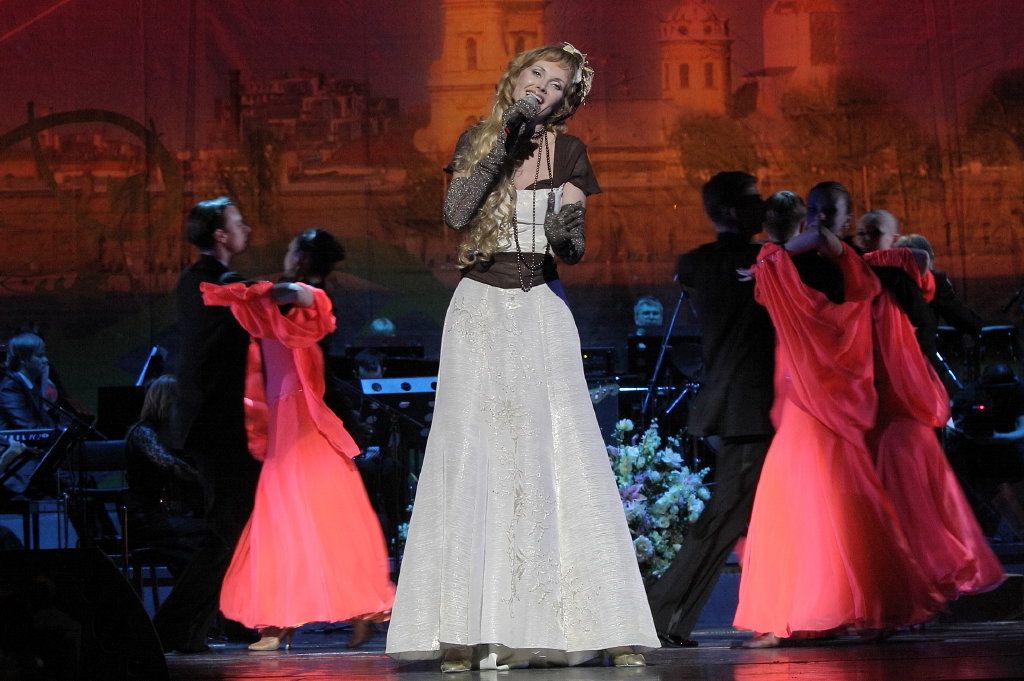
Juliana Polansky is an award-winning singer, musical theatre performer, and U.S.-credentialed vocal educator whose teaching practice is grounded in extensive professional performance experience.
Her artistic background spans musical theatre, classical and operatic repertoire, Russian romance, world music, and contemporary styles. Years of work on stage, in rehearsal rooms, recording studios, and international performance settings gave her a practical understanding of the voice as both a musical instrument and a means of artistic communication.
Polansky has coached dozens of singers of different ages and levels — from beginners discovering their voices to emerging artists and professional performers preparing for auditions, competitions, recordings, and stage productions. She has taught musical theatre voice at the French Conservatory of Music in Beverly Hills and served as a jury member at international vocal competitions.
In recent years, she has expanded her work through group vocal trainings and online educational programs. Experience with a wide range of voices has allowed her to identify recurring vocal challenges and develop her own teaching methods, combining vocal coordination, body awareness, listening skills, interpretation, and emotional expression.
Her approach does not rely on imitation or a single model of the “correct” sound. Instead, students learn to understand their individual instruments, recognize their natural strengths, and develop vocal results they can reproduce independently.
At the center of Polansky’s work is a commitment to preserving and sharing the beauty of vocal art while making it relevant and accessible to today’s singers. Her teaching connects technical freedom with artistic identity, helping students build voices they can trust and use with confidence.
Credentials
2011
Award Winner
2012
Gala at Wilshire Theatre, Los Angeles
2013
Professional Association Member
2015
Vocal Instructor
2016–2022
Professor of Voice
2017
Certified Vocal Educator
My teaching method
At the core of my teaching practice lies a departure from mechanical repetition. Rather than drilling scales on autopilot, students learn conscious vocal mastery grounded in somatic awareness, vivid auditory imagination, and an intuitive understanding of how sound is born within their own body.
Traditional voice training often focuses merely on correcting surface symptoms. In my studio, we address the root causes: breath holding, ingrained muscular compensations, and the habit of overloading the vocal folds. By developing keen kinesthetic awareness, singers commit the sensation of healthy, free vocal production to muscle memory — learning to command their instrument independently rather than merely mimicking a coach.
My methodology synthesizes vocal physiology with the artistic freedom championed by classical and contemporary pedagogical traditions. It draws inspiration from the expressive artistry of Marilyn Horne’s The Song Continues, the conscious approach to the vocal mechanism in Cathrine Sadolin’s Complete Vocal Technique, and the practical clarity of Justin Stoney’s Sing Like Never Before.
Technical mastery is essential, but it must never diminish individuality. Singing becomes truly compelling when sound mechanics unite with authentic dramatic intent, allowing every artist to develop a sustainable, resilient voice that stays with them throughout their career — even when the teacher is not in the room.
Signature method
Singing through sensation: the key foundations of the method, connecting technique and artistry.
Hearing your own timbre and learning to shape the colors of your voice — moving away from copying other performers toward a recognizable sound of your own.
Flexible, coordinated breath support that powers the phrase without rigidity, locking or throat tension.
Releasing jaw, tongue and neck tension through body awareness, and memorizing the sensation of free, healthy sound production.
Understanding the image, feeling and inner movement behind every sound, so technique serves expression and stage confidence.
Learning to hear and correct yourself — a lasting toolkit that stays with you on stage, in the studio and in audition rooms.
Watch & listen
Performance footage, technique clips and repertoire notes live on my YouTube channel — the easiest way to hear how I work before your first lesson.
Visit the YouTube channelEvery new student begins with a short application and an introductory online lesson — a voice assessment and a written path forward.