Vocal health
Vocal Cool-Down After Singing: What Laryngeal Massage Can Do
By Juliana Polansky · November 2, 2026 · 7 min read
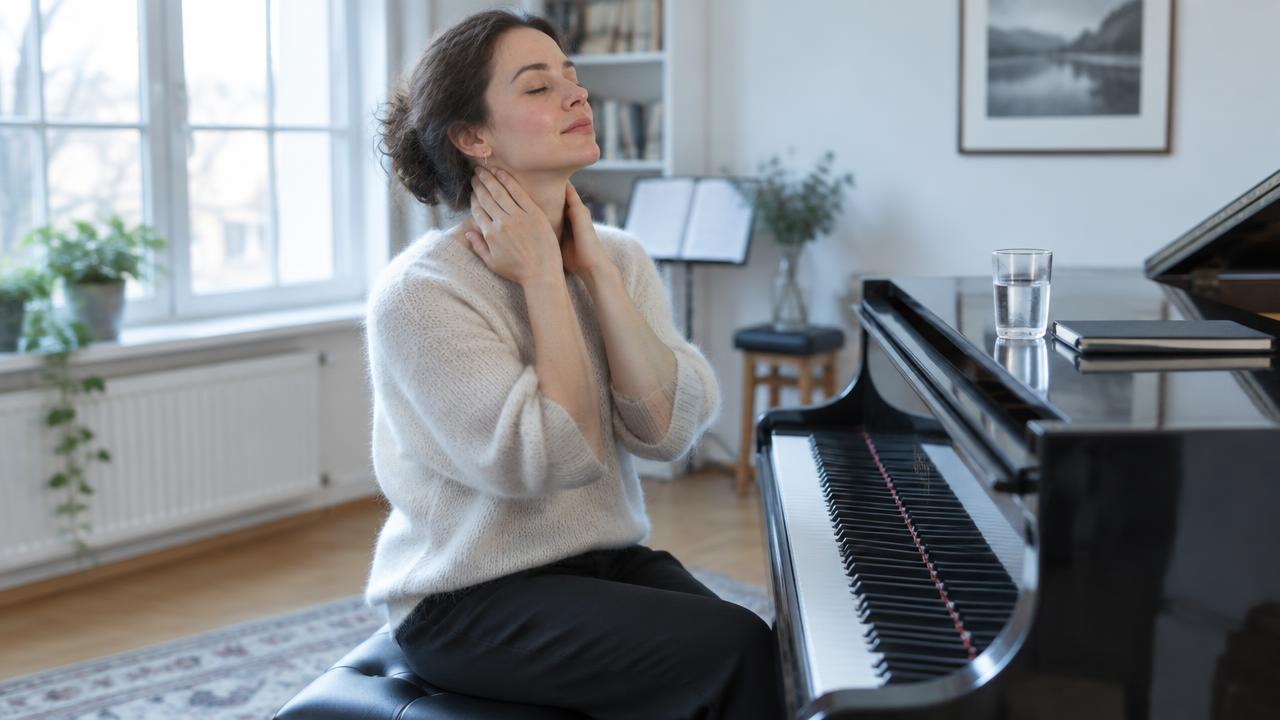
Singers often prepare carefully for a demanding session, then finish the final phrase and immediately start talking over the room. I encourage a quieter transition, but not because the voice needs a ritual to prevent damage. The useful question is whether a brief cool-down helps you return to easy, comfortable voicing without adding more work. A lip trill or straw exercise may help; pressing on a tired throat may not. I separate gentle vocal exercises, light external muscle relaxation, and clinical laryngeal massage because they do different things. Here is how I approach the first five minutes after heavy singing, what those minutes can reasonably accomplish, and when symptoms need assessment rather than another exercise.
Why cool down your voice after a heavy singing session
After sustained high notes, loud singing, or a long rehearsal, I want the next vocal task to feel less demanding, not simply quieter. Singers can carry the effort of a difficult passage into ordinary speech: a lifted chin, a rigid jaw, or an unnecessarily forceful onset. A short cool-down offers a structured opportunity to notice those habits and reduce the demand. It is a transition toward comfortable speaking and rest, not proof that your vocal folds have recovered. If singing has already become uncomfortable, adding exercises is not the first step.
I do not present cooling down as a guaranteed way to prevent injury, remove swelling, or erase an excessive workload. Evidence for a particular recovery benefit or an ideal routine is limited, and some singers feel better simply stopping. The practical value is a low-effort check: can you make an easy sound without pushing, and does your speaking voice feel ordinary afterward? After a heavy session, reduce unnecessary talking, avoid competing with background noise, and drink water as needed. A cool-down cannot compensate for continuing to sing beyond your comfortable capacity.
A five-minute vocal cool-down you can try after singing
I use this sequence only when the voice is comfortable, without pain or new hoarseness. For the first 30 seconds, stop singing, release your jaw, and let breathing settle without taking exaggerated breaths. From 0:30 to 1:30, make six easy lip trills of about five seconds each, resting about five seconds between them. Stay around a comfortable speaking-range pitch. Lip trills are a semi-occluded vocal tract exercise, or SOVT: the partly closed outlet changes the pressure conditions during voicing. They should feel easy, not like a test of breath support.
From 1:30 to 2:30, make four small descending sirens on a lip trill, allowing roughly 15 seconds for each sound and its rest. Glide smoothly from a comfortable middle note toward an easy lower note. From 2:30 to 3:30, make four shorter pitch-down slides on a soft voiced V, each spanning only a few comfortable notes, with generous pauses. From 3:30 to 4:30, phonate quietly through a regular drinking straw into the air: five seconds on, five seconds off, repeated six times. Spend the final 30 seconds silent. End sooner if any step increases effort.
- Use a comfortable middle-to-low range, not your lowest possible note.
- Keep sounds easy and clear rather than whispered or forced.
- Skip an exercise that feels difficult; do not force completion.
What laryngeal massage and neck massage can actually do
When singers ask about laryngeal massage, I first clarify what they mean. Gentle contact with the shoulders or surrounding neck muscles is not the same as manual treatment around the larynx. A voice-specialized speech-language pathologist may use circumlaryngeal manual techniques after assessment when muscle tension is contributing to a voice problem. That treatment can address a muscular component of inefficient voicing; it does not directly massage the vocal folds, which sit inside the larynx. Feeling temporarily looser also does not establish that tension was the only cause of a changed voice.
For self-care, I favor releasing the jaw and shoulders without force and, if comfortable, using light contact over the tops of the shoulders. I do not recommend digging into the front or sides of the neck, pushing the voice box downward, or copying deep manipulation from a video. Massage cannot repair a vocal fold injury, rule out a lesion, or make continued singing safe. If you have been taught a specific self-massage technique by your treating clinician, follow those individualized instructions. Otherwise, keep your hands away from direct pressure on the larynx and seek guidance.
- External muscle relief is not vocal fold treatment.
- Avoid deep pressure or attempts to reposition the larynx.
- Stop touch immediately if it causes pain, dizziness, or discomfort.
How to tell whether you overdid the singing or the cool-down
I ask singers to notice change rather than chase a particular sensation. New raspiness, unexpected breathiness, reduced range, pain, or a speaking voice that requires extra effort are reasons to stop singing. Needing more air or more pressure to produce a familiar note also matters, even if you can still reach it. These observations cannot tell you exactly what is happening inside the larynx. They can tell you that this is not the moment to repeat the difficult passage, extend the cool-down, or press on the neck until something feels different.
The cool-down itself can become extra workload. A descending siren that turns into a long, pushed low note is no longer a gentle transition. Neither is a lip trill held until you run out of air. I would stop at the first clear increase in effort rather than finish the timer. Later, notice whether ordinary speech feels easy, and check again the next morning without repeatedly testing high notes. Comfortable neck muscles do not guarantee healthy vocal folds, and an apparently successful exercise does not cancel new hoarseness or pain.
When to see a voice specialist instead of trying more massage
If hoarseness, pain, breathiness, or range loss persists past a day of rest, I direct the singer to a laryngologist or voice-specialized speech-language pathologist before further technique changes. A laryngologist can examine the vocal folds; a speech-language pathologist with voice expertise can assess vocal function and help coordinate appropriate care. You do not need to wait that long when a change is sudden or substantial. Sudden marked hoarseness or voice loss during forceful singing warrants prompt medical assessment, even without pain. Stop singing and do not use massage or exercises to test whether it has resolved.
Trouble breathing requires urgent medical care, not a cool-down. For less urgent but recurring symptoms, I encourage an assessment rather than a cycle of singing hard, massaging, and trying again. Note when the change began, what vocal task preceded it, and whether speaking is affected; that information is more useful than repeated range checks. Once a clinician has clarified the problem, coaching can support the recommended plan. The goal is not to become dependent on a recovery ritual. It is to sing with a manageable workload and recognize when your voice needs something beyond practice.
- Persistent symptoms after a day of rest need specialist assessment.
- Sudden major voice change deserves prompt medical attention.
- Breathing difficulty requires urgent care.
Juliana Polansky recommends: Set a five-minute timer and keep every sound within an easy range. Leave the rests intact. If your voice becomes rougher, less comfortable, or harder to produce, stop instead of trying a different exercise.

About the author
Juliana Polansky
Vocal coach specialising in classical technique and musical theatre, teaching private lessons online and in person by request in Southern California.
If you are working through similar vocal concerns, preparing for an audition, or have specific goals for your voice, you are warmly welcome to reach out — we can start with a private diagnostic consultation.