Auditions
Audition Curveballs: What to Do When the Accompanist Rushes or the Director Redirects
By Juliana Polansky · October 18, 2026 · 8 min read
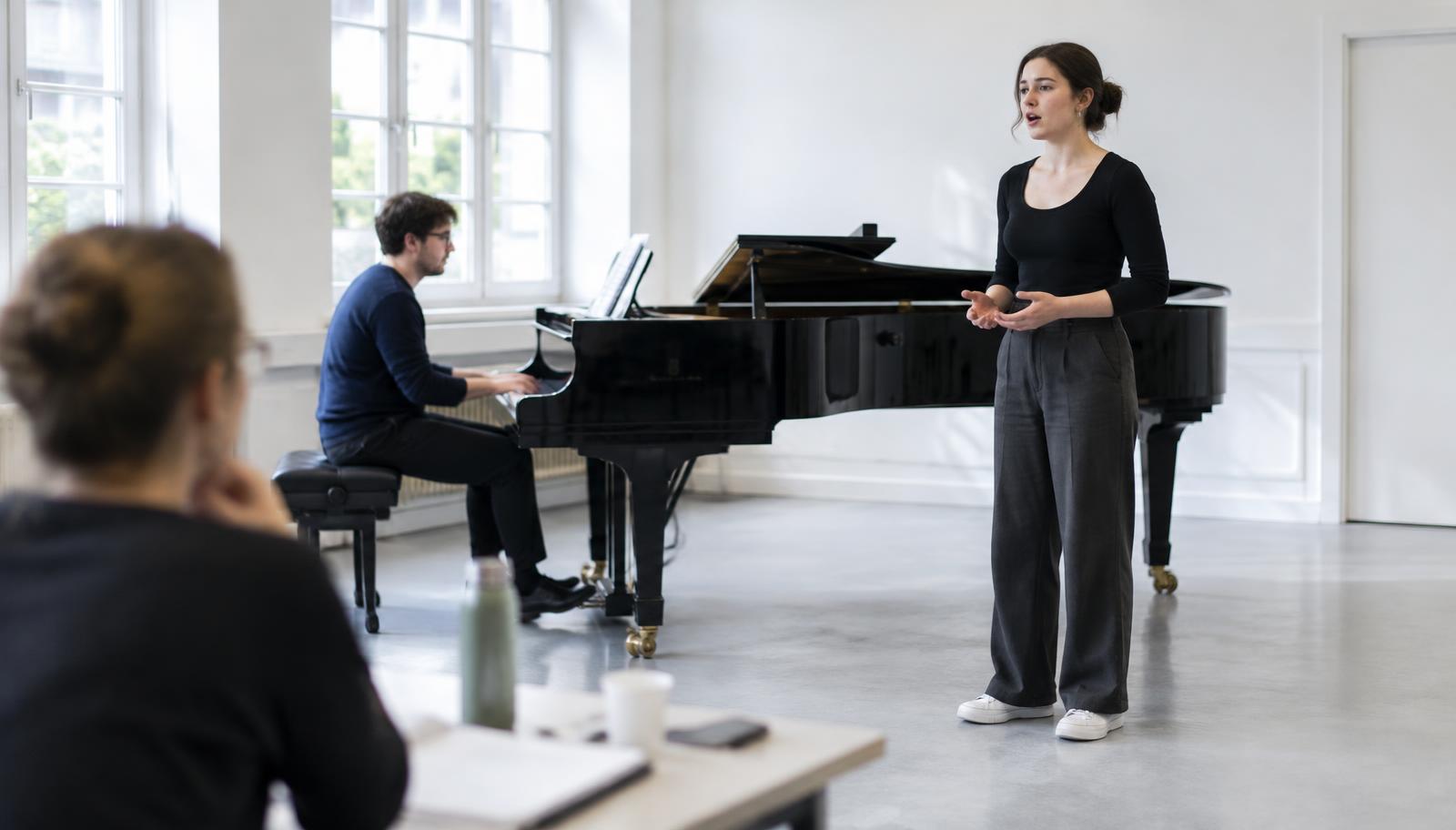
Every experienced singer has a story like this. The accompanist plays the opening not at your tempo but at theirs — faster, or with a heavy beat you never intended. Or you are asked to sing the cut again 'in character', or softer, or from a completely different starting note than you rehearsed. In my studio, I tell students the truth they do not want to hear in the week before an audition: the plan will not survive contact with the room. What separates a working singer from a nervous one is not a perfect plan — it is a rehearsed ability to bend.
The accompanist is human — plan for it
Accompanists at auditions are usually excellent. They sight-read hundreds of cuts, transposing on request, following singers they have never met. But they are working at speed, from the music you hand them, often with thirty seconds to look at it. The single most common technical problem in auditions is not the wrong song — it is a cut that is hard to follow: unclear tempo markings, missing dynamics, first and second endings crammed together, a starting note the pianist has to guess.
When I prepare a student's audition book, we treat the accompanist as a collaborator we are briefing. The cut should open with two bars of piano that set the tempo, the tempo marking should be written in words as well as numbers ('moderate ballad, not too slow'), and the first sung note should be marked in the margin. This is not decoration. It is the cheapest insurance you can buy against the exact problem this article is about.
- Two bars of piano introduction at the top of every cut.
- Tempo written in words plus a metronome number.
- The first sung pitch clearly marked — and be ready to give it yourself if asked.
When the tempo is wrong: hold your ground or follow?
So it happens anyway: the pianist takes your up-tempo number as a dirge, or races through your quiet ballad. The first decision is instantaneous and it matters. If the tempo is merely different — not wrong for the song — the professional move is to follow. An audition is not the place to conduct an argument with the piano. A slightly brisker reading of your piece shows that you are a musician, not a metronome with vibrato.
But some tempi genuinely break a song: a cut that only works with breath and space becomes nonsense at double speed, and a song built on drive collapses when dragged. In that case, singers sometimes simply begin the piece again, singing in — clearly and confidently — at their tempo, giving the accompanist a new anchor. Most pianists are grateful. What almost never works is singing at your tempo while the piano plays another: two people pulling the same cut in opposite directions. If the ship is sinking, stop, breathe, and start together. Nobody remembers a restarted audition; everybody remembers a public tug-of-war.
The redirect: 'Can you sing it differently?'
The director asks for it again — brighter, or sexier, or 'less pretty', or as if you were angry. I have sat in enough studios to notice what students assume when this happens: that the first attempt failed. Sometimes it did. But very often the redirect is the audition. The panel knows you can sing the cut — they just heard it. What they are buying is a performer who can take an adjustment and transform, not merely repeat louder.
The way to prepare for a redirect is to rehearse one before you need it. When we run mock auditions in lessons, I deliberately ask for one adjustment the student has not prepared: 'sing it as if you have already won', 'sing it to one specific person in the back row', 'sing it the way you sang it at your last lesson, not the way you sang it just now'. The first few times, singers freeze. Within a few sessions they learn the underlying skill: choose one parameter — intention, volume, tempo, eye line — and move it, while the technique stays put.
- Decide in advance your three 'adjustment levers': intention, dynamic, tempo.
- Practise singing the same cut three different ways in one lesson, not one way three times.
- A redirect deserves a genuine change — a repeated attempt that is identical but louder reads as panic.
Three studio drills for adaptability
These are the exercises I use when a student tells me the room is the problem. They are uncomfortable by design — that is where their value comes from. Do them at the end of a warm warm-up, when the voice is ready and the ego is optional.
- Random entry: have a friend play a single note — any note — and sing your first phrase from there, without a piano introduction. This trains the ability to give yourself your own key and your own tempo.
- Tempo dial: sing the same sixteen bars at three deliberately different tempi, keeping the text intelligible and the technique intact at each one. If the cut only survives at one speed, either re-cut it or make peace with the risk.
- Director's choice: after each run-through, someone gives you one word ('angrier', 'later', 'to me') and you do it again immediately. Ten minutes of this builds more audition muscle than an hour of perfect repetition.
After the room: reset, don't spiral
When an audition goes sideways, the singer usually knows it instantly — and the way they handle the next sixty seconds changes how the panel remembers it. My advice is always the same: finish the phrase you are singing, close the book, thank the pianist by name, and leave at your own pace. Panels do not remember auditions the way we imagine; they remember composure far more than perfection.
Then, within a day, write down what actually happened while it is fresh. Was the cut unclear? Did you get rattled by the redirect or genuinely mis-sing something? Almost every curveball points to a preparation gap you can close for next time. Adaptability is not a personality trait you either have or lack — it is a rehearsal habit, and it responds to practice exactly the way your voice does.
Juliana Polansky recommends: Before you walk into any audition, decide this in advance: if the pianist takes a different tempo, I will follow unless the song breaks — and then I will restart calmly, once. A decision made in the hallway takes courage out of the equation.

About the author
Juliana Polansky
Vocal coach specialising in classical technique and musical theatre, teaching private lessons online and in person by request in Southern California.
If you are working through similar vocal concerns, preparing for an audition, or have specific goals for your voice, you are warmly welcome to reach out — we can start with a private diagnostic consultation.