Auditions
College Music Auditions: Choosing Classical and MT Repertoire
By Juliana Polansky · November 15, 2026 · 5 min read
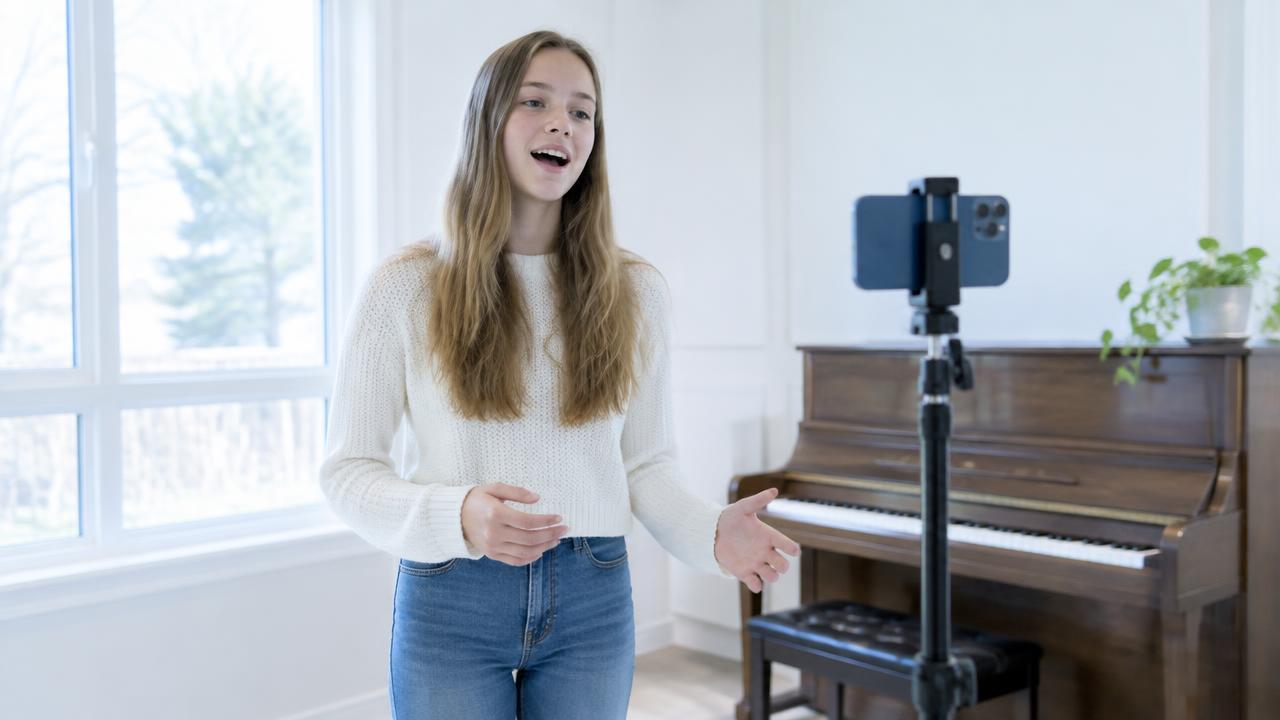
College voice and musical theatre auditions ask young singers to make grown-up decisions: which pieces represent them, which languages to include, how to show range without overreaching. Requirements differ widely between programs, so my first step is always to read each school’s current guidelines carefully. After that, the process is about matching repertoire to the voice the student has now, not the voice they hope to have in four years.
How do you choose college audition repertoire?
Start with the requirements of every program on the list, gathered in one table: number of pieces, languages, styles, time limits, and whether a prescreen recording is required. Then look for overlap. A carefully chosen set of pieces can often satisfy several schools at once.
I choose repertoire that sits comfortably in the student’s current range and shows healthy technique. Panels listen for potential and musicianship, so a well-sung, age-appropriate piece is more persuasive than an ambitious aria that exposes strain.
- List every program’s current requirements.
- Find pieces that serve several schools.
- Choose age-appropriate, comfortable repertoire.
Classical voice auditions: art songs and arias
For classical programs, students usually need contrasting art songs in different languages, often including Italian and English, sometimes German or French. Early Italian songs and English art songs are common starting points because they suit young voices and show line and diction clearly.
I discourage heavy operatic arias for most high school singers. Programs typically know that young voices are still developing and are more interested in musicianship, language preparation, and a healthy sound.
Musical theatre auditions: contrasting songs and cuts
Musical theatre programs usually request contrasting songs, such as a legit or golden-age piece and a contemporary one, plus a monologue and sometimes a dance call. Contrast should be real: different eras, tempos, and characters, not two similar ballads.
I help students choose songs that reveal acting choices as well as voice. A song with a clear objective and shifting tactics gives the panel more to see than one held long note.
- Genuine contrast in era, tempo, and character.
- Songs with clear acting objectives.
- Cuts that follow each school’s time limit.
Preparing prescreen recordings
Prescreens are often the first filter. Follow each program’s technical instructions exactly: framing, slate wording, file format, and whether accompaniment must be live or may be recorded. Use a quiet room with even front lighting and a recording setup that captures the voice without clipping on loud passages.
I advise students to record several takes over more than one day, choosing the most honest performance rather than the most polished-looking one. A voice that is tired from a full day of retakes rarely gives its best.
Coaching college auditions online
Most college audition coaching translates very well to online lessons: repertoire selection, language preparation, acting work, and prescreen setup can all be done remotely. Families in San Jose and Silicon Valley can do this entirely online with me, and in-person sessions are available by appointment in Southern California for final run-throughs.
I recommend starting at least several months before prescreen deadlines. That gives time to learn the music well, test it in front of others, and adjust choices without panic.
Juliana Polansky recommends: Make one spreadsheet of every program’s requirements this week. Seeing the overlap usually shortens the repertoire list and lowers the stress immediately.
Planning college auditions? See audition coaching options

About the author
Juliana Polansky
Vocal coach specialising in classical technique and musical theatre, teaching private lessons online and in person by request in Southern California.
If you are working through similar vocal concerns, preparing for an audition, or have specific goals for your voice, you are warmly welcome to reach out — we can start with a private diagnostic consultation.