Vocal Technique
Classical Technique for Contemporary and Broadway Singers
By Juliana Polansky · November 14, 2026 · 5 min read
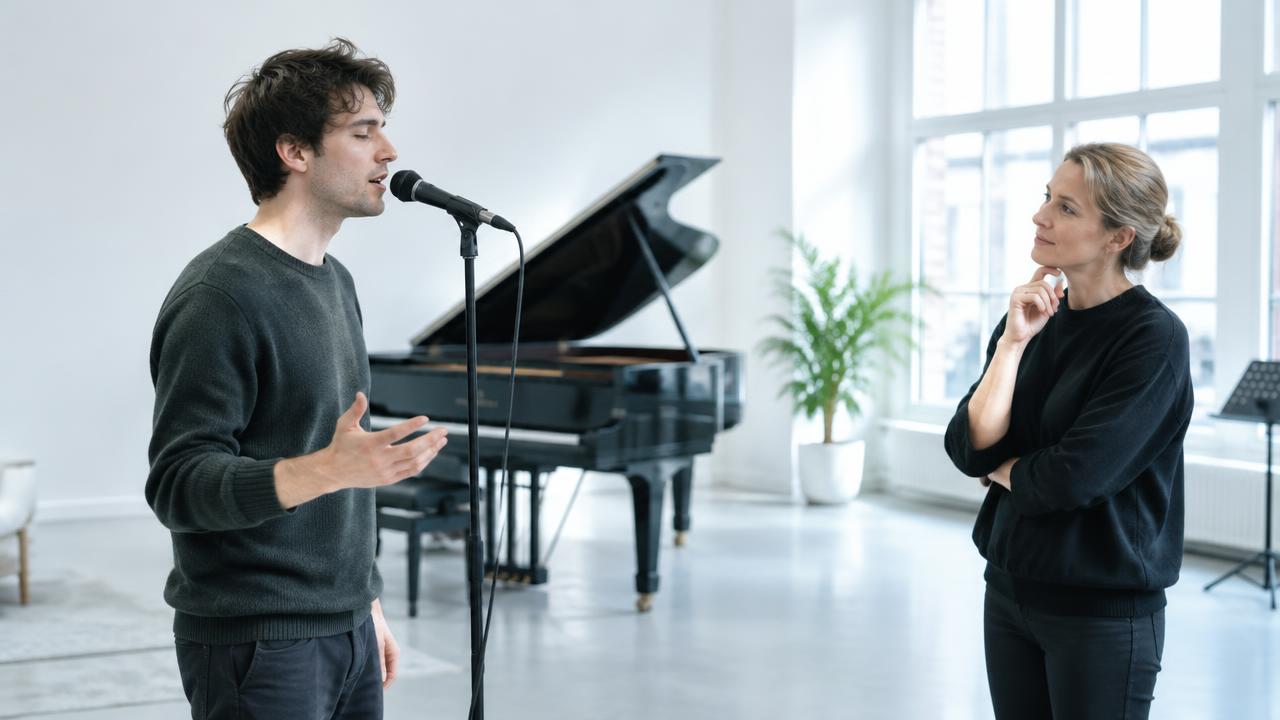
Contemporary and musical theatre singers sometimes worry that classical training will make them sound operatic. That concern is understandable, but it misreads what classical technique offers. My background is classical, and what I bring to pop and Broadway singers is not a style but a set of principles: balanced breath, efficient onset, clear vowels, and a consistent line. Those principles help any style. The art lies in knowing which classical habits to keep and which to leave in the opera house.
What does classical technique offer contemporary singers?
The bel canto tradition emphasized a beautiful, connected line sung with ease. In practice, that means an efficient balance between breath pressure and vocal fold closure, often discussed as appoggio, and vowels that stay clear across the range. Contemporary singers benefit from the same foundation: steadier sustain, more reliable pitch on long notes, and less fatigue over a long set or show.
Legato, the smooth connection between notes, is another transferable skill. Even in rhythmically driven music, a singer who can connect a phrase has more choices about where to articulate and where to flow.
- Balanced breath and efficient onset.
- Clear vowels across the range.
- Connected legato as a stylistic option.
Which classical habits do not suit pop or Broadway?
A consistently lowered larynx, darkened vowels, and constant vibrato belong to specific classical aesthetics. In most contemporary styles, they sound out of place. Broadway and pop generally favor speech-like vowels, clearer diction, and vibrato used as an expressive choice rather than a default.
Classical singers crossing into contemporary music also need to rethink volume. With a microphone, the voice does not need to fill a hall unamplified, so the effort and resonance strategies can be lighter and more intimate.
How I adapt bel canto principles for Broadway
I keep the breath and onset work, then adjust vowels toward speech. A singer might practice a phrase on a classical vowel for ease, then gradually modify it toward the spoken word while keeping the same breath balance. The result is a sound that feels supported but reads as natural speech-singing.
For belt and mix, classical training is not a replacement for style-specific work, but it supports it. Singers who already know how to manage breath pressure tend to find a healthier belt faster, because they are less likely to push for volume.
Exercises that bridge classical and contemporary singing
I often begin with a sustained vowel on a comfortable pitch, focused on an easy onset and steady tone without vibrato, then allow vibrato to appear at the end. This teaches vibrato as a choice. Next, I ask singers to sing a phrase legato on a single vowel, then sing it with the words, keeping the line as connected as the style allows.
Finally, we speak the lyric, then sing it on the same vowel colors as speech. That sequence keeps classical efficiency while preserving contemporary authenticity.
- Straight tone into optional vibrato.
- Legato on one vowel, then with words.
- Speech-colored vowels on the sung line.
Who benefits most from this kind of training
Crossover singers moving between legit musical theatre and contemporary roles, pop singers who want more stamina, and actors adding singing to their work all benefit. I work with these singers online and, by appointment, in person in areas including Beverly Hills and the wider Los Angeles Westside.
The goal is never to make a contemporary singer sound classical. It is to give them a stable foundation so their style is a choice, not a limitation.
Juliana Polansky recommends: Sing one phrase of your current song on a single open vowel, then with the words. Keep whatever ease you found on the vowel, and let the words be as natural as speech.
Coaching on the Westside by appointment: Vocal coaching in Beverly Hills

About the author
Juliana Polansky
Vocal coach specialising in classical technique and musical theatre, teaching private lessons online and in person by request in Southern California.
If you are working through similar vocal concerns, preparing for an audition, or have specific goals for your voice, you are warmly welcome to reach out — we can start with a private diagnostic consultation.